Why it comes first
Your drivers and passenger attendants spend time alone with children and with adults who may not be able to say what happened to them. Tender questions on safeguarding are often marked hard (see Applying for a tender and how it is scored), but the real reason is that this is where a mistake hurts somebody. Build it before your first run, not for your first tender.
Name a safeguarding lead, and a deputy
Pick one person to lead on safeguarding and one to cover when they are away. In a small company that is usually the owner or the transport manager.
The lead:
- takes the calls from drivers and passenger attendants;
- decides what to report, and to whom;
- keeps the records;
- has child protection training, refreshed regularly.
Put their name and number where every driver and passenger attendant can find them.

A written policy
Write a safeguarding policy for children and one for adults at risk, or one that covers both. It says who the lead is, what counts as a concern, what to do and who to tell, how a concern is recorded, what happens to a crew member while an allegation is looked into, and when it was last reviewed. Councils ask for it with the tender (see The policies councils ask for).
Training
Everyone who works with the people you carry needs safeguarding training before their first run. TfL expects its Safeguarding Awareness course of every private hire driver applicant, and its guidance tells operators that staff and drivers must know what to do about a safeguarding concern. Councils usually ask for more, so read each specification, and keep the date of every course (see Drivers and passenger attendants).

When there is a concern
TfL's driver handbook is plain: if a driver thinks a child or an adult at risk needs help, or the person tells them, the driver must report it to the operator and the police. Use 999 in an emergency and 101 when it is not one. TfL tells drivers to keep a written note of dates, times, what happened and descriptions of the people involved. Turn that into steps anybody can follow:
- If someone is in immediate danger, call 999 first.
- Tell the safeguarding lead the same day, even if you are unsure.
- Listen, stay calm and write down what was said, in their words. Do not investigate yourself.
- Pass the concern to the right place, as below.
- Record what you did and when.

Who you tell
- The police, if a crime may have been committed or someone is in danger. TfL's operator handbook says all reports of a potential crime are passed to the police immediately.
- The council that placed the child or adult, through the contact in your contract. Councils also run adult safeguarding teams: Hounslow's page, for example, gives a form and a phone line and says to call 999 if there is immediate danger.
- The Local Authority Designated Officer (LADO) if the concern is about an adult who works with children, such as one of your own drivers or passenger attendants. Every local authority has one. Council pages say to contact the LADO if the person may have harmed a child, may have committed an offence against a child, or may be a risk to children or unsuitable to work with them. Tell a senior manager at once. The LADO should be told within one working day.
- The Disclosure and Barring Service, if you remove someone from work with children because they pose a risk of harm. One London council's LADO page says the organisation must make a referral.
- TfL, in writing within 14 days, if you dismiss a driver for unsatisfactory conduct.
While an allegation is looked into
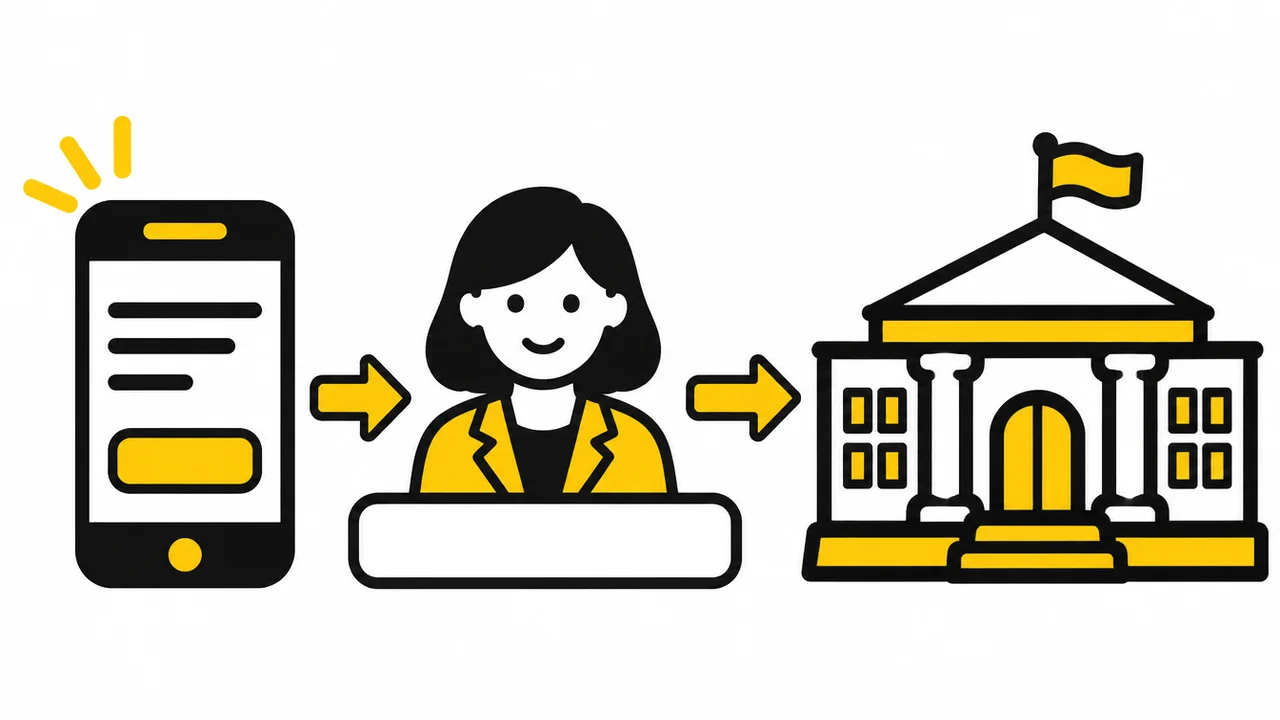
Talk to the LADO before you start any internal investigation, and before you decide what the person does in the meantime. The LADO's job is to keep the child safe while making sure the person is treated fairly. Tell other staff only what they need to know. The process is stressful for everyone, so decide who supports the person involved.
What you write down
Record every concern and incident, whether or not you pass it on:
- date and time, route and vehicle;
- who was involved, by full name, and who saw or heard;
- what was seen or said;
- what you did, who you told and when;
- the outcome.
Keep records safe and share them only with those who need them. Keep your TfL records as TfL requires (see Your TfL private hire operator licence).

Where Journeymark fits
In Journeymark a safeguarding concern can be recorded in the office or from its own button in the crew app. It goes to the safeguarding leads your company ticks (up to three); with none ticked, every Admin. It does not go to everybody in the office. It does not decide what to report for you.
Whistleblowing
Make it safe for a driver or passenger attendant to raise a worry about a colleague or about you. GOV.UK says the law protects workers from unfair treatment for blowing the whistle, from the start of employment. You are not legally required to have a whistleblowing policy, but GOV.UK says it is a good idea, and it points to prescribed persons (regulators) as an outside route. Councils may ask for one too, so write it (see The policies councils ask for).
Next, see Getting on council portals and frameworks.

Sources
- Private Hire Vehicle Driver's Handbook (TfL) - https://content.tfl.gov.uk/phv-driver-handbook-v1.pdf (opens in a new tab)
- London Private Hire Operator's Handbook (TfL) - https://content.tfl.gov.uk/private-hire-operator-handbook.pdf (opens in a new tab)
- Apply for a private hire driver licence (TfL) - https://tfl.gov.uk/info-for/taxis-and-private-hire/licensing/private-hire-driver-licence (opens in a new tab)
- LADO: managing allegations (Royal Borough of Kensington and Chelsea) - https://www.rbkc.gov.uk/lscp/information-professionals-and-volunteers/lado-managing-allegations (opens in a new tab)
- Dealing with allegations against people working with children (London Borough of Sutton) - https://www.sutton.gov.uk/children-and-families/keeping-children-safe/dealing-allegations-against-people-working-children/dealing-allegations-against-people-working-children (opens in a new tab)
- Report a safeguarding concern about an adult (London Borough of Hounslow) - https://www.hounslow.gov.uk/safeguarding-adults/report-safeguarding-concern-adult (opens in a new tab)
- Whistleblowing guidance for employers (GOV.UK) - https://www.gov.uk/guidance/whistleblowing-guidance-for-employers (opens in a new tab)
- Protocols and procedures - London Safeguarding Children Procedures (Royal Borough of Kensington and Chelsea Local Safeguarding Children Partnership) - https://www.rbkc.gov.uk/lscp/about-us/protocols-and-procedures (opens in a new tab)
Checked on 28 October 2026
This is general guidance, checked against the official sources on the date shown. It is not legal, tax or insurance advice: check your own position with TfL, HMRC, your insurer or a solicitor.