
Every vehicle needs its own TfL licence
In London, a private hire vehicle (PHV) must hold a TfL PHV licence before it carries a booking, and your TfL operator licence sets the maximum number of vehicles you may have available. Having more, even for a short time, breaks a licence condition; to grow past your band you apply for a new licence in the higher band. Check with TfL that the vehicle type you plan to buy can be licensed as a PHV before you buy it.
Minibuses need a different licence
| Passengers it can carry | Licence | From |
|---|---|---|
| 8 or fewer passenger seats | Usually private hire vehicle licensing | TfL |
| 9 or more passengers | Public service vehicle (PSV) operator's licence | A traffic commissioner |
If a tender asks for minibuses, before you commit:
- Read the PSV operator licensing guide on GOV.UK.
- Find out what driving entitlement a minibus driver needs.
- Ask the buyer what it expects.

Getting a vehicle licensed
You book an inspection in advance and take the original documents:
- the V5C registration certificate from DVLA;
- hire and reward insurance documents (see Insurance you need);
- an MOT certificate issued within the last 14 days;
- any documents for modifications to the vehicle, and any other document TfL asks for.
TfL's application fee for a vehicle is £84 (not refundable) and the grant fee is £56. A licence lasts 12 months from the date of inspection, so every vehicle is inspected every year. Licence discs must be displayed on the front and rear of the vehicle, and PHVs must be right-hand drive unless TfL grants an exemption. Fees change, so check the current figures on TfL's pages. If a vehicle fails the inspection, the re-test must be done within 21 days of the failed inspection.
Age and emissions
These rules matter most when you buy.
- A vehicle already licensed must be no older than 10 years at relicensing. TfL can allow up to five more years in some cases, including for wheelchair accessible vehicles, and the exemption is applied for on form PHV/301.
- Since 1 January 2023, every PHV licensed for the first time must be zero emission capable and Euro 6. In practice this means a fully electric vehicle, or a plug-in hybrid that meets TfL's emissions and range limits (TfL's emissions page gives the figures).
- The Ultra Low Emission Zone covers all of London. A vehicle that does not meet the standard pays a daily charge, which TfL publishes.
Buy with the licence in mind. A used vehicle that is cheap but over the age limit, or not zero emission capable when first licensed, may not be licensable at all. Ask TfL before you pay.

Wheelchair-accessible vehicles
TfL puts a PHV on its published list of wheelchair-accessible vehicles when it enables the user of a Department for Transport "reference wheelchair" to enter, leave and travel in the passenger compartment in safety and reasonable comfort while seated in their wheelchair. Ask TfL how a vehicle you plan to buy would be designated before you buy it. The law is clear on the duties that follow:
- A driver of a designated vehicle must carry a passenger while in their wheelchair, give reasonable mobility help and not charge extra for it. A driver can only be excused for medical reasons, with an exemption from TfL.
- Since 28 June 2022, it is an offence for an operator to refuse a booking because of disability, or to stop a driver carrying or helping a disabled person.
- Drivers must carry assistance dogs without charge.
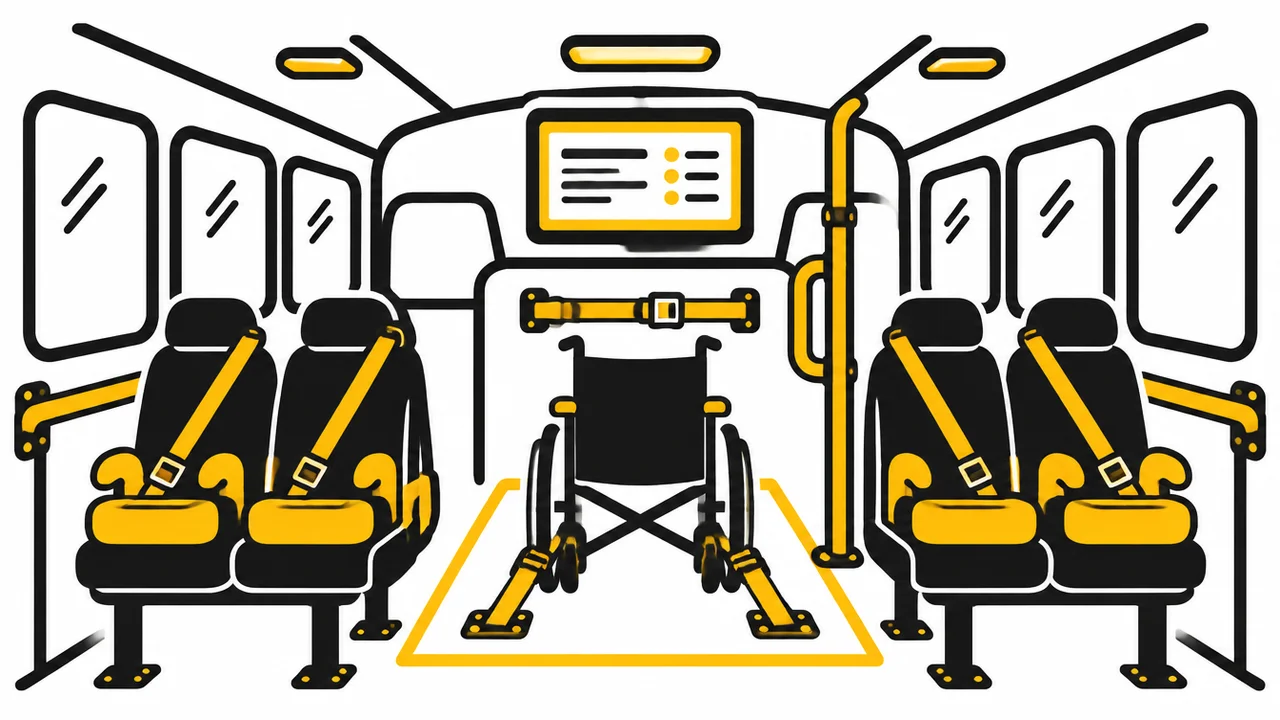
The driver's handbook tells drivers to check wheelchair safety belts and equipment as part of the vehicle check. The restraint and ramp standards a council wants (and any lift examination schedule) are written in each council's specification, its written description of the service it is buying, and they differ between councils. Read the specification, and ask your vehicle supplier for the maker's documents.
Children in the vehicle
TfL's driver handbook says the driver is responsible for making sure children under 14 wear a seat belt or sit in an approved child car seat. Councils often go further for SEND routes, for example by naming the types of seat or harness. Plan the equipment against the pupils on your first routes, not against the minimum.
What to keep on file for each vehicle
- The TfL PHV licence and its expiry date.
- The current MOT certificate and its expiry date.
- The hire and reward insurance certificate and its expiry date.
- The V5C.
- Inspection and service records, and defect reports from the driver's daily check.
- For wheelchair-accessible vehicles: the maker's documents for the ramp or lift and the wheelchair restraints.
TfL expects a copy of each vehicle's PHV licence and insurance certificate in your operator records, and you upload vehicle data weekly (see Your TfL private hire operator licence).
Where Journeymark fits
Journeymark keeps each vehicle's documents and expiry dates against the vehicle. A vehicle with an expired document cannot be put on a run unless somebody allowed to authorise overrides does so by name, with a written reason and an end date.
Next, see Drivers and passenger attendants.

Sources
- Apply for a private hire vehicle licence (TfL) - https://tfl.gov.uk/info-for/taxis-and-private-hire/licensing/private-hire-vehicle-licence (opens in a new tab)
- Emissions standards for private hire vehicles (TfL) - https://tfl.gov.uk/info-for/taxis-and-private-hire/emissions-standards-for-phvs (opens in a new tab)
- Taxi and Private Hire Vehicle Policy (TfL, December 2021) - https://content.tfl.gov.uk/taxi-and-private-hire-vehicle-policy-december-2021.pdf (opens in a new tab)
- Taxi and private hire licence fees, notice 05/26 (TfL) - https://content.tfl.gov.uk/05-26-taxi-and-private-hire-licence-fees.pdf (opens in a new tab)
- Private Hire Vehicle Driver's Handbook (TfL) - https://content.tfl.gov.uk/phv-driver-handbook-v1.pdf (opens in a new tab)
- PSV (Public Service Vehicle) operator licences (GOV.UK) - https://www.gov.uk/psv-operator-licences (opens in a new tab)
- Public service vehicle operator licensing guide (GOV.UK) - https://www.gov.uk/guidance/public-service-vehicle-operator-licensing-guide (opens in a new tab)
- Taxis and private hire vehicles: Disabled Persons Act 2022, notice 08/22 (TfL) - https://content.tfl.gov.uk/08-22-taxis-and-private-hire-vehicles-disabled-persons-act-2022.pdf (opens in a new tab)
- London Private Hire Operator's Handbook (TfL) - https://content.tfl.gov.uk/private-hire-operator-handbook.pdf (opens in a new tab)
Checked on 28 October 2026
This is general guidance, checked against the official sources on the date shown. It is not legal, tax or insurance advice: check your own position with TfL, HMRC, your insurer or a solicitor.